

If the early 2020s taught the business world one lesson, it was this: supply chains are fragile. The days of relying on a single factory on the other side of the world to deliver products “just in time” are fading.

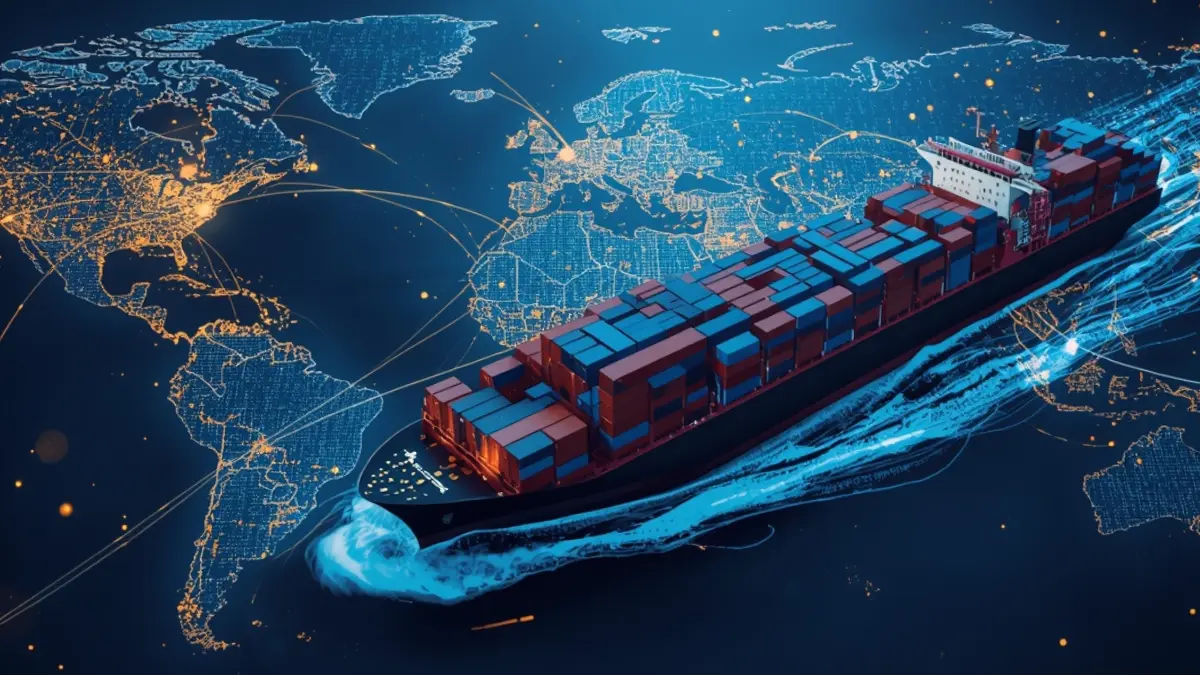
In 2025, a massive restructuring of global trade is underway.
From “Friend-shoring” to AI-driven logistics, companies are no longer prioritizing just the cheapest option—they are prioritizing the safest option. Understanding the top global supply chain trends 2025 is now essential for any business leader looking to build resilience in a volatile market. This article outlines the three major shifts defining the US and global economy this year.
1. The Move from “Offshoring” to “Nearshoring”
One of the most significant global supply chain trends 2025 has revealed is the reversal of a 30-year standard. The era of “Offshoring” (sending manufacturing to whichever country had the lowest labor costs) is ending.
The new trend is Nearshoring.
- What is it? Moving production closer to the customer base. For US companies, this means moving factories from Asia to Mexico or Latin America.
- Why do it? It reduces shipping times from weeks to days and lowers the risk of ocean freight delays. Data shows that cross-border trade between the US and Mexico has reached record highs as businesses seek stability over rock-bottom prices.
2. The “China Plus One” Strategy
While China remains a manufacturing giant, few US companies are comfortable relying on it exclusively anymore due to geopolitical tensions and trade tariffs.
Most major corporations have adopted a “China Plus One” strategy.
- The Strategy: Keep some operations in China, but open a secondary hub in another country like Vietnam, India, or Thailand.
- The Benefit: If one supply line is blocked (due to a pandemic, storm, or political dispute), the other keeps running. This diversification is becoming a standard requirement for businesses to get insurance and financing.
3. The Digitization of Logistics (AI & Blockchain)
Supply chains used to be run on paper and spreadsheets. Now, they run on data. This technological leap is the third major pillar of global supply chain trends 2025.
- Real-Time Tracking: In 2025, businesses expect to know exactly where their container is, down to the meter. Smart containers equipped with IoT (Internet of Things) sensors track temperature and location in real-time.
- AI Prediction: Artificial Intelligence is now used to predict disruptions before they happen. For example, AI can analyze weather patterns to warn a logistics manager to re-route a shipment before a hurricane hits.
Conclusion
The global supply chain is no longer just about moving boxes; it is about resilience. The global supply chain trends 2025 we are seeing—specifically the shift to Nearshoring and the adoption of AI logistics—are making businesses stronger. For the US economy, this helps protect against the kind of shortages that caused inflation in previous years.
Read More – The Rise of Sustainable Investing (ESG): A 2025 Market Overview | ESG investing market trends
Frequently Asked Questions (FAQ)
What is the difference between Nearshoring and Reshoring?
Nearshoring means moving production to a nearby country (e.g., a US company manufacturing in Mexico). Reshoring means bringing production back to the home country entirely (e.g., a US company opening a factory in Ohio).
Why are supply chains changing now?
The primary drivers are risk management and speed. After the disruptions of 2020-2022, companies realized that saving a few cents on manufacturing wasn’t worth the risk of having no product to sell for months.
How does this affect small businesses?
Small businesses benefit from faster shipping times and more reliable inventory. However, they may face slightly higher costs as manufacturing moves away from the cheapest global locations.
What is the “China Plus One” strategy?
It is a risk-reduction strategy where companies diversify their manufacturing so they do not rely 100% on China. They keep a backup or secondary manufacturing base in another country like India or Vietnam.